
Choosing the right ecommerce platform is one of the most important decisions an enterprise business can make. The platform you select affects everything from customer experience and operational efficiency to long-term growth and scalability. Among the many options available today, Adobe Commerce and Shopify Plus continue to stand out as two of the most popular enterprise ecommerce solutions.
When comparing adobe commerce vs shopify plus, there is no one-size-fits-all answer. Both platforms are powerful, but they are designed with different business needs in mind. While Shopify Plus focuses on simplicity, speed, and ease of management, Adobe Commerce offers greater flexibility, customization, and control for businesses with complex requirements.
In this guide, we’ll compare the two platforms across architecture, total cost of ownership, customization, and enterprise capabilities to help you determine which solution is the right fit for your business.
Architecture: PaaS vs SaaS
One of the biggest differences between Adobe Commerce and Shopify Plus lies in how the platforms are built.
Shopify Plus is a Software-as-a-Service (SaaS) platform. This means Shopify manages hosting, security updates, maintenance, and infrastructure on behalf of merchants. Businesses can focus on running their stores without worrying about managing servers or handling technical updates.
Adobe Commerce, on the other hand, provides Platform-as-a-Service (PaaS) capabilities through Adobe Commerce Cloud. This gives businesses much greater control over their infrastructure, application architecture, and integrations while still benefiting from cloud-based hosting.
For companies with straightforward ecommerce requirements, Shopify Plus offers faster deployment and lower technical overhead. However, businesses with unique workflows, complex product catalogs, or advanced integrations often benefit from Adobe Commerce’s flexible architecture.
When evaluating adobe commerce vs shopify plus, it’s important to consider not only your current business requirements but also how your platform will support future growth.
Total Cost of Ownership (TCO) Breakdown
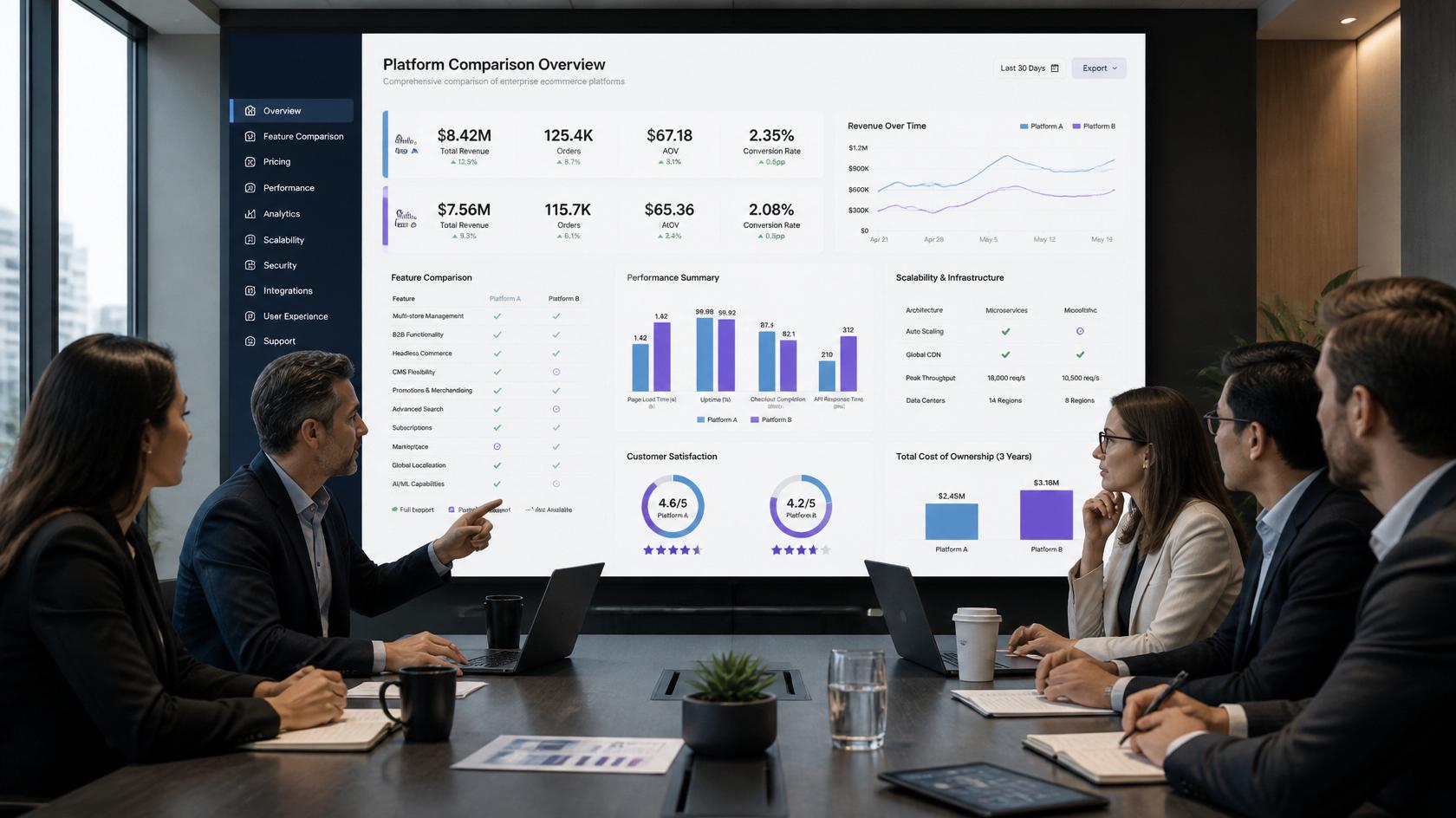
Licensing costs are only one part of the overall investment when selecting an enterprise ecommerce platform. Businesses should evaluate the total cost of ownership (TCO), which includes implementation, customization, maintenance, hosting, third-party applications, and ongoing support.
Shopify Plus follows a subscription-based pricing model. Because hosting, security, and many platform updates are included, businesses often experience more predictable operating costs. Implementation timelines are generally shorter, which can reduce initial development expenses.
Adobe Commerce typically requires a larger upfront investment. Development, integrations, infrastructure, and customization can increase implementation costs. However, this investment often provides greater long-term flexibility for businesses with highly customized ecommerce operations.
When comparing enterprise ecommerce platforms, organizations should also consider operational efficiency, scalability, and the ability to support future business expansion—not just the initial price tag.
A lower upfront cost doesn’t always translate into lower long-term costs if your business eventually outgrows the platform’s capabilities.

Customization and B2B Capabilities
Customization is often the deciding factor for enterprise businesses.
Shopify Plus provides a robust ecosystem of themes, applications, APIs, and automation tools that allow merchants to customize many aspects of their online stores. For many growing businesses, these capabilities are more than sufficient.
However, some organizations require deeper customization.
Adobe Commerce was built with flexibility in mind. Developers can customize checkout experiences, pricing structures, workflows, customer portals, product catalogs, and backend business processes with significantly fewer platform limitations.
This becomes especially important for businesses operating complex B2B ecommerce models.
Adobe Commerce offers native enterprise features such as:
- Company accounts
- Shared catalogs
- Custom pricing
- Purchase approval workflows
- Quote management
- Advanced inventory management
These capabilities make Adobe Commerce particularly attractive for manufacturers, distributors, wholesalers, and other organizations with sophisticated purchasing processes.
While Shopify Plus continues to expand its enterprise functionality, businesses comparing Magento vs Shopify enterprise solutions should carefully evaluate how much customization they require today—and how much they may need in the future.
When to Choose Shopify Plus
Shopify Plus is an excellent choice for businesses that want to launch quickly, reduce technical complexity, and focus on growth rather than infrastructure management.
It works particularly well for brands that:
- Need a fast implementation timeline
- Sell primarily through D2C channels
- Prefer predictable monthly costs
- Want a platform that requires minimal maintenance
- Rely on third-party apps for additional functionality
Businesses planning a shopify plus migration from legacy ecommerce platforms often appreciate Shopify’s straightforward onboarding process and user-friendly administration.
For companies with relatively standard ecommerce requirements, Shopify Plus provides an excellent balance of performance, usability, and scalability.
When Adobe Commerce is Necessary
Adobe Commerce becomes the stronger option when ecommerce operations become significantly more complex.
Businesses often choose Adobe Commerce when they require:
- Highly customized customer experiences
- Advanced B2B functionality
- Complex ERP, CRM, or PIM integrations
- Large product catalogs
- Multi-store and multi-brand management
- Flexible checkout customization
- Extensive workflow automation
For organizations with unique business models, Adobe Commerce provides a level of flexibility that is difficult to achieve on many SaaS platforms.
As enterprise requirements continue to evolve, Adobe Commerce enables businesses to adapt without being constrained by platform limitations.
Agency Support Requirements
Selecting the right platform is only part of the equation. Successful enterprise ecommerce projects also depend on having experienced implementation partners.
Whether choosing Adobe Commerce or Shopify Plus, businesses often require agencies that understand platform architecture, integrations, performance optimization, SEO, user experience, and long-term support.
For Shopify Plus, agencies typically focus on theme customization, app integrations, conversion optimization, and migration projects.
Adobe Commerce agencies often provide more extensive technical services, including custom module development, ERP integrations, API development, cloud optimization, and enterprise-level support.
Working with an experienced agency ensures that businesses maximize their investment while avoiding costly implementation mistakes.
Conclusion
The debate around adobe commerce vs shopify plus isn’t about identifying a universally better platform—it’s about finding the solution that best aligns with your business goals.
Shopify Plus offers speed, simplicity, and ease of management, making it an excellent choice for businesses seeking rapid growth with lower technical complexity.
Adobe Commerce delivers unmatched flexibility, powerful B2B capabilities, and deep customization, making it ideal for enterprises with complex operational requirements.
As enterprise ecommerce continues to evolve in 2026, businesses should evaluate their long-term strategy, technical requirements, customer expectations, and growth plans before making a decision.
By carefully assessing your needs today while planning for tomorrow, you can choose an ecommerce platform that supports sustainable growth and delivers exceptional customer experiences for years to come.