


Modern customers expect more than a generic shopping experience. Whether they are browsing a B2C storefront or purchasing through a B2B portal, they want relevant products, personalized content, and recommendations that match their interests. As ecommerce competition continues to grow, delivering personalized experiences has become a necessity rather than a luxury.
This is where adobe commerce machine learning capabilities are transforming the way businesses engage with customers. By leveraging artificial intelligence and data-driven insights, Adobe Commerce enables brands to create personalized shopping journeys at scale. Instead of manually segmenting customers or relying on basic recommendation engines, businesses can use machine learning to understand customer behavior and deliver experiences tailored to individual preferences.
From product recommendations to dynamic content and customer segmentation, machine learning is helping enterprises improve customer satisfaction, increase conversions, and build long-term loyalty.
The Evolution of Enterprise Personalization
Personalization has evolved significantly over the last decade. In the early days of ecommerce, personalization often meant adding a customer’s name to an email or displaying recently viewed products. While these tactics provided some value, they were limited in scope and effectiveness.
Today’s customers interact with brands across multiple devices, channels, and touchpoints. They expect businesses to understand their preferences and provide relevant experiences throughout the entire buying journey.
This shift has driven the adoption of adobe commerce machine learning technologies that can analyze large volumes of customer data in real time. Rather than relying on static rules, machine learning models continuously learn from customer interactions and adapt accordingly.
For example, a customer who frequently purchases fitness equipment may receive personalized product recommendations, tailored promotions, and content related to their interests. Another customer browsing luxury home décor products may see entirely different suggestions and experiences.
This level of personalization allows brands to move beyond one-size-fits-all marketing and create meaningful customer interactions that drive engagement and sales.
As customer expectations continue to rise, businesses that invest in magento personalization strategies are better positioned to deliver the relevant experiences modern shoppers demand.
Deep Dive into Adobe Sensei Capabilities
One of the key technologies powering personalization within Adobe Commerce is adobe sensei ecommerce.
Adobe Sensei combines artificial intelligence and machine learning to help businesses automate decision-making, uncover customer insights, and deliver more personalized shopping experiences. Instead of requiring extensive manual intervention, Sensei analyzes customer behaviour and identifies patterns that can improve ecommerce performance.
Some of the most valuable capabilities include:
- Intelligent product recommendations
- Predictive merchandising
- Automated content optimization
- Customer behavior analysis
- Personalized search experiences
- Audience segmentation
The ability to process large datasets in real time makes Adobe Sensei particularly valuable for enterprise businesses managing thousands of products and customers.
Automated Product Recommendations
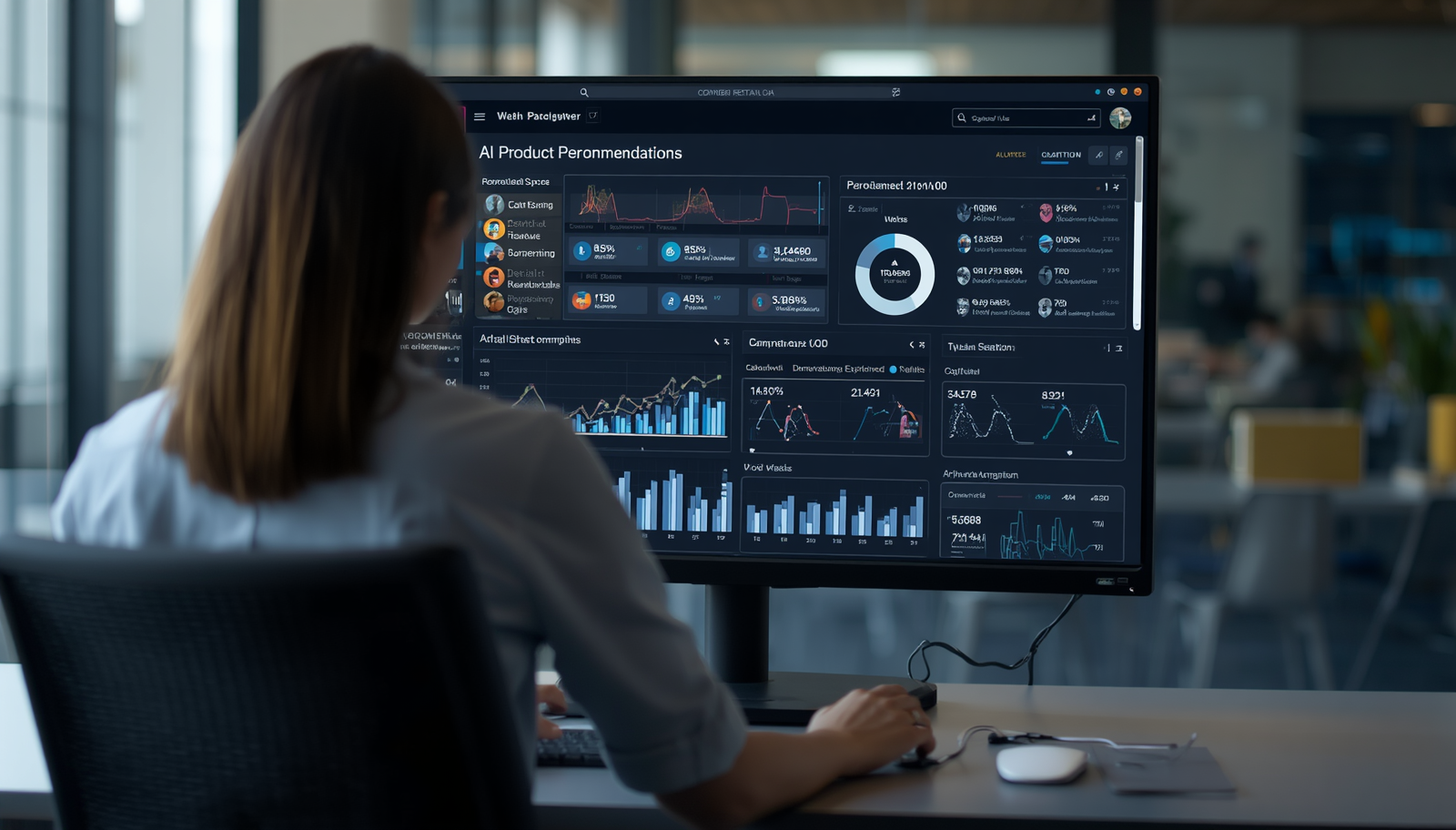
One of the most widely used applications of adobe commerce machine learning is the delivery of AI product recommendations.
Rather than displaying the same products to every visitor, machine learning algorithms analyze browsing history, purchase behavior, product affinity, and customer preferences to generate personalized recommendations.
Examples include:
- Frequently bought together products
- Related product suggestions
- Personalized upsell opportunities
- Cross-sell recommendations
- Recently viewed product suggestions
These recommendation engines help customers discover relevant products faster while increasing average order value and overall revenue.
For both B2B and B2C businesses, AI product recommendations create a more engaging shopping experience and encourage customers to explore additional products.
Dynamic Content Delivery
Content personalization has become equally important in modern ecommerce.
Dynamic content delivery allows businesses to display different banners, promotions, product collections, and messages based on individual customer behaviour.
For example, a first-time visitor may see educational content introducing a product category, while a returning customer may be shown personalized offers based on previous purchases.
By leveraging adobe sensei ecommerce, businesses can automate content personalization and ensure customers receive the most relevant experience possible without requiring constant manual updates.
This creates a more seamless shopping journey and increases the likelihood of conversion.
Strategies for B2B and B2C Contexts
Although personalization is valuable across all ecommerce businesses, implementation strategies often differ between B2B and B2C environments.
In B2C ecommerce, personalization typically focuses on individual consumers. The goal is to deliver product recommendations, targeted promotions, and personalized content that encourage immediate purchases.
In B2B ecommerce, buying journeys are often longer and involve multiple decision-makers. Personalization strategies may focus on account-specific catalogs, custom pricing, reorder recommendations, and tailored purchasing experiences.
Despite these differences, both business models benefit from adobe commerce machine learning capabilities.
Successful personalization strategies often include:
- Real-time customer insights
- Personalized search results
- Behavioral targeting
- Customized promotions
- Product recommendation engines
- Dynamic content experiences
When implemented effectively, these strategies improve customer engagement while supporting long-term business growth.
Customer Segmentation Models
Customer segmentation remains one of the most important foundations of ecommerce personalization.
Traditional segmentation often grouped customers into broad categories based on demographics or purchase history. While useful, these approaches can overlook important behavioral differences.
Machine learning-powered segmentation models provide a more advanced solution.
Instead of relying on fixed criteria, machine learning continuously analyzes customer activity and identifies patterns that may not be immediately obvious.
Businesses can segment customers based on:
- Purchase frequency
- Product preferences
- Browsing behavior
- Customer lifetime value
- Engagement patterns
- Buying intent
These insights help businesses create highly targeted campaigns and deliver experiences that resonate with specific customer groups.
As part of broader magento personalization initiatives, intelligent segmentation allows brands to communicate more effectively and improve overall marketing performance.

Conclusion
Personalization is no longer a competitive advantage reserved for industry leaders—it has become an expectation among modern ecommerce customers. As online shopping experiences continue to evolve, businesses must find scalable ways to deliver relevant and meaningful interactions.
By leveraging adobe commerce machine learning, organizations can automate personalization, improve customer engagement, and drive stronger business results. Technologies such as adobe sensei ecommerce, intelligent segmentation, dynamic content delivery, and AI product recommendations enable brands to create individualized experiences without increasing operational complexity.
Whether operating in a B2B or B2C environment, businesses that invest in personalization are better positioned to build customer loyalty, increase conversions, and maximize long-term growth.
In today’s competitive ecommerce landscape, personalization at scale is no longer optional—it is a key driver of success.